
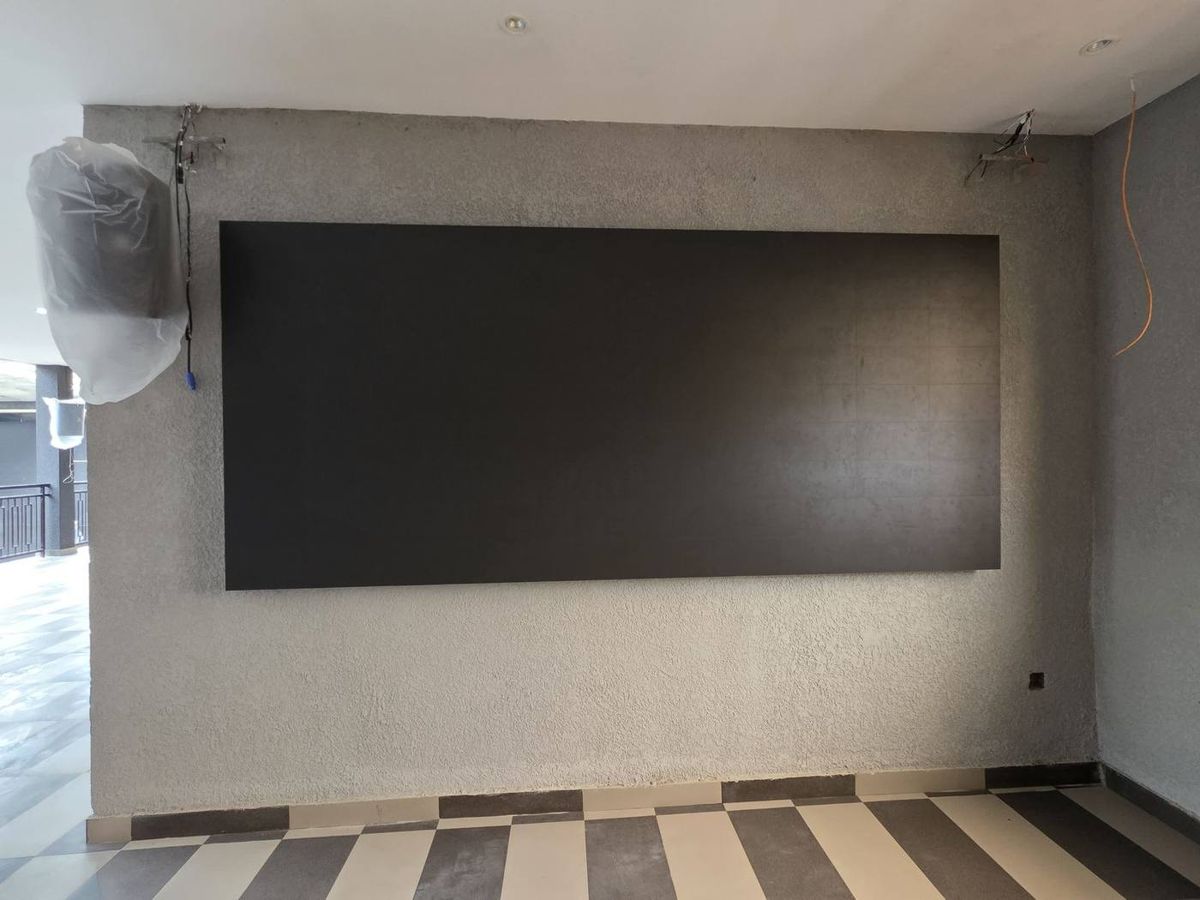
Indoor vs outdoor changes everything about the spec
An LED screen meant for indoor use — a lounge, a retail storefront, an event hall — is built differently from one meant to survive outdoor weather and compete with daylight brightness. Getting this distinction right at the start avoids buying the wrong panel type for the environment.
Screen size should follow viewing distance, not the other way around
A screen that looks right on a spec sheet can look completely wrong once mounted, because pixel pitch (the spacing between LEDs) determines how close viewers can stand before the image looks blocky. The right pixel pitch depends on how far away your audience will actually be — a stage screen viewed from 20 metres away needs a very different spec from a screen mounted a few feet from customers at a counter.
Brightness needs to suit the room or the sky
Indoor screens can run at lower brightness than outdoor ones, which need enough output to stay visible under direct sunlight. Under-spec this and the screen will look washed out exactly when the most people are around to see it.
Installation and structural support are not an afterthought
LED panels have real weight, and outdoor installations also need to account for wind load and weatherproofing. This is a structural and electrical job as much as a technical one.
Where this fits with FAF
FAF Global Resources Limited's LED Display & Screen Solutions division covers supply, installation, configuration, and ongoing maintenance and technical support — for businesses, events, churches, hotels and entertainment venues, indoor and outdoor.